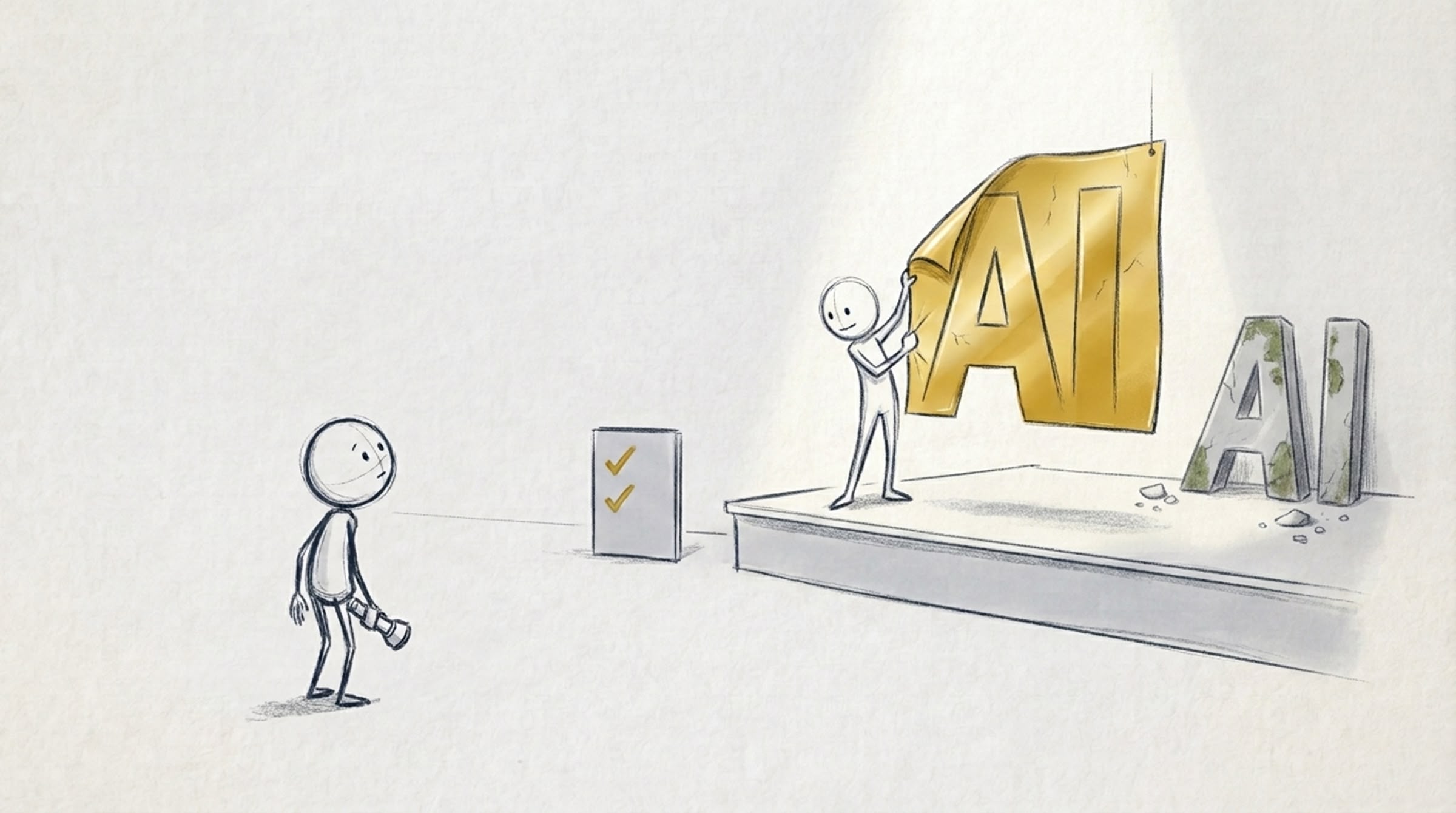
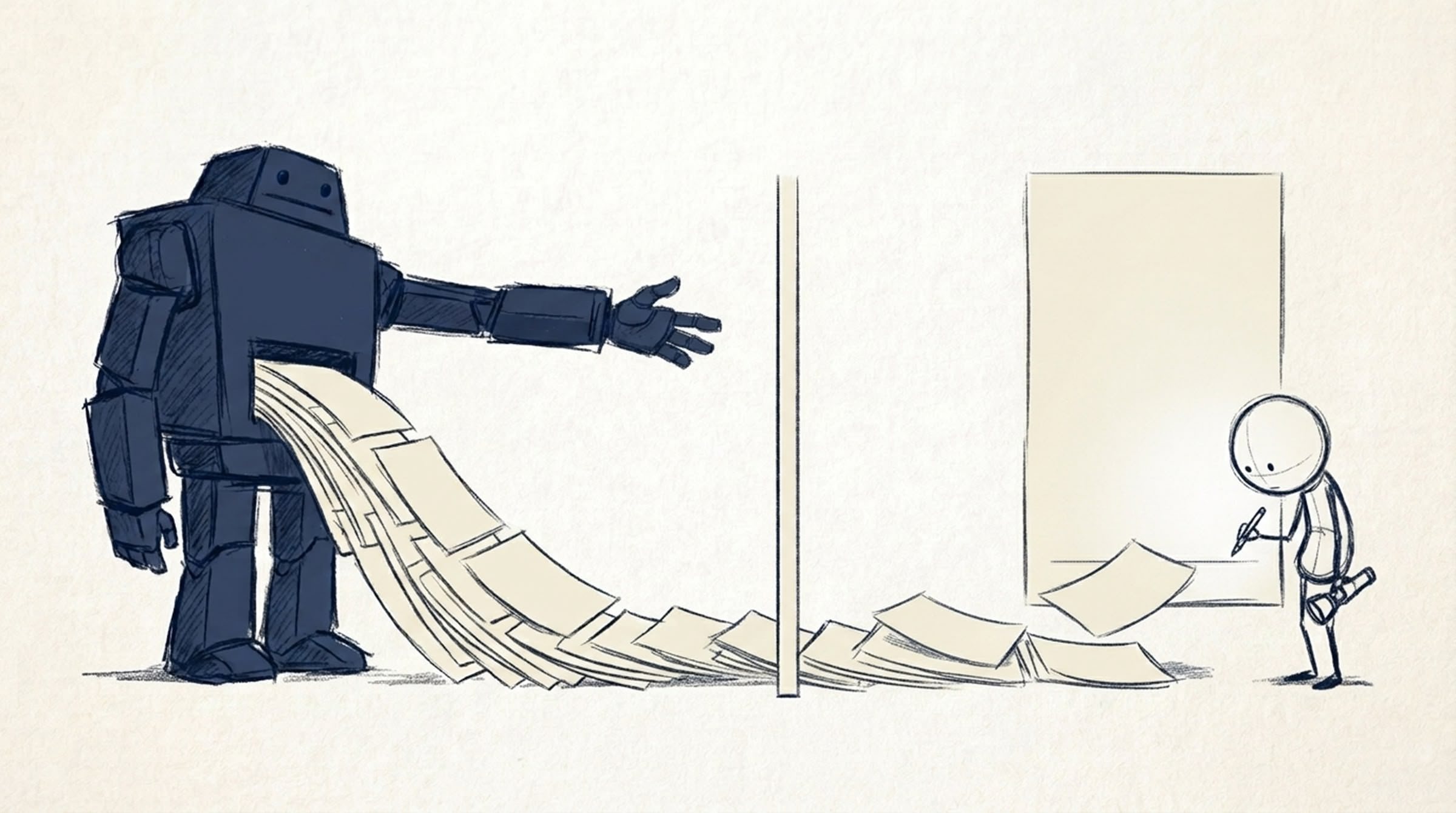
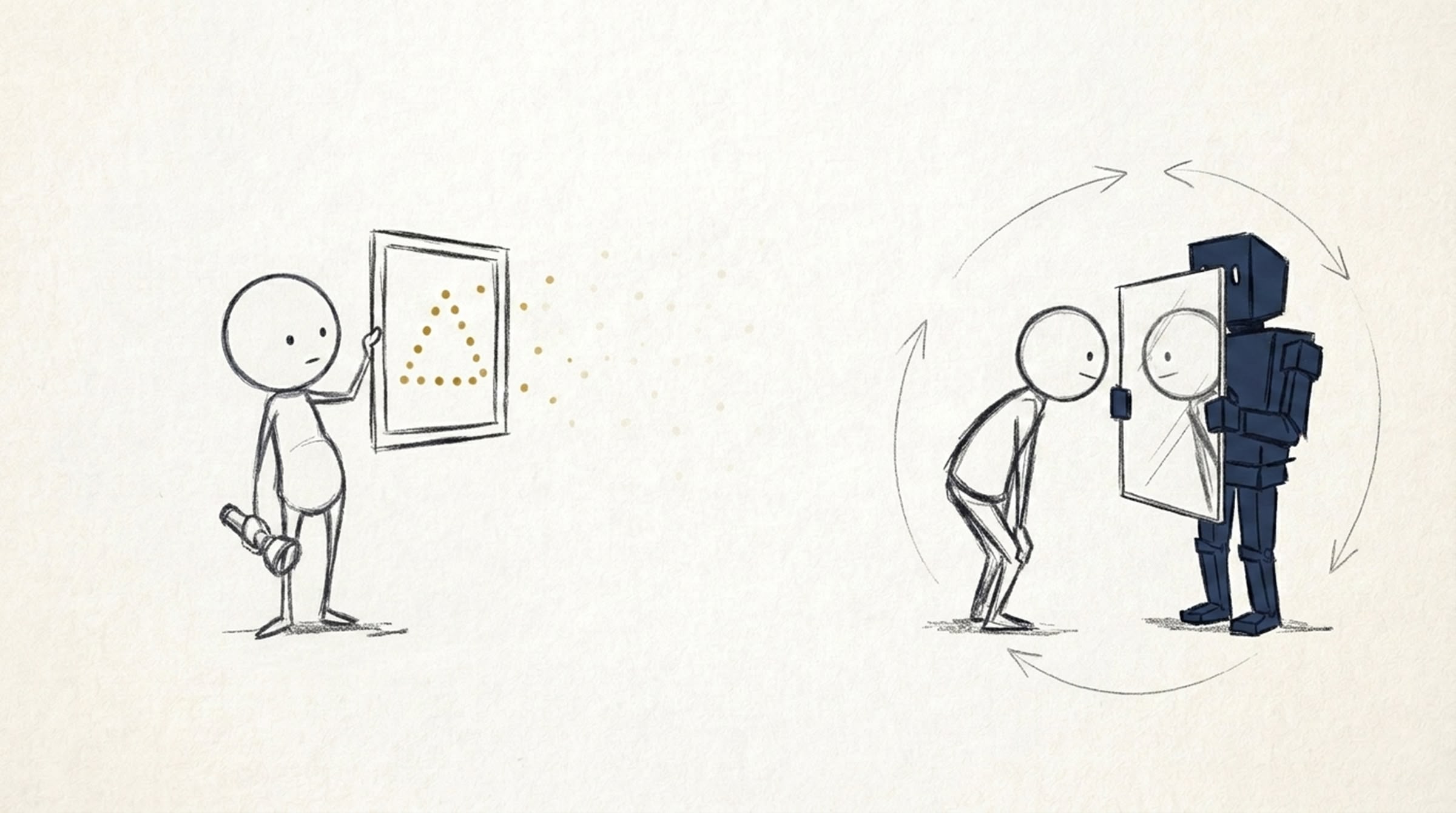
Six essays on what artificial intelligence cannot take from investor relations. As the machines absorb the mechanical layers of the job — producing, reading, optimising, disclosing, acting, interpreting — value migrates to the small human residual each one leaves behind.

Every wave of automation invites the same anxious question: what is left for the human? The honest answer in investor relations is that less is left than the profession likes to admit — and that what remains is worth more, not less, for being smaller.
These six essays each take one layer of the IR job that machines are now absorbing — producing the call, reading the disclosure, optimising the website, disclosing the AI strategy, acting through agents, interpreting the buy-side — and ask what survives the handover. In each case the same thing survives: a thin band of judgment the machine cannot occupy, and which the market quietly pays for.
Read as a set, they describe a migration. The mechanical layers commoditise. Value concentrates in the residual. The work is no longer to do the mechanical thing well; it is to be unmistakably the human on the other side of it.
AI can draft the script, field the easy questions, and smooth every rough edge off the call. The trouble is that the rough edges were the signal — the part a careful listener was actually trading on.

The first thing to read your disclosure is no longer a human analyst; it is a model parsing for structure it can trust. Where coverage is thin and signals are scarce, the machine reads worst — and that is most of Asia.

Answer-engine optimisation is a real discipline: making your disclosure legible to the models that now mediate it. The returns vendors attach to it are not real — they are invented to close the sale.

Companies are learning to talk about their AI before they can prove it works — the same arc sustainability disclosure travelled a decade ago. The market prices the telling long before it can verify the doing.

Agentic systems can now draft, route, and even publish on the company’s behalf. Automation removes the typist long before it removes the person who has to stand behind what was typed.

The buy-side is wiring AI into its process, but the models retrieve and confirm far more readily than they reconsider. They make an existing view cheaper to hold — not easier to overturn.

We welcome conversations with IR professionals, board directors, and capital markets participants.
Start a Conversation